[ Resume Templates for Data Analysts ]
Data analyst resume template
A data analyst resume is judged on two things at once: the tool stack (SQL, Excel, Tableau or Power BI, sometimes Python) and whether the work described actually changed a business decision, not just produced a chart. Reviewers in this field tend to skim for both in the same pass — the tools tell them you can do the job technically, and the outcome tells them you understood why the analysis mattered.
The most common gap on analyst resumes isn't a missing tool — it's a dashboard or report described without the decision it enabled. "Built a weekly sales dashboard in Tableau" says what you made; "built a weekly sales dashboard that flagged a regional drop-off, prompting a pricing change" says why it mattered.
This page covers what to prioritize on a data analyst resume specifically, and which Refyn templates fit that expectation.
What reviewers scan for first
- Your tool stack, named specifically — SQL, Excel, Tableau, Power BI, Python — rather than a generic "data analysis" line.
- Whether a bullet ties an analysis or dashboard to a business decision, not just a deliverable.
- The kind of stakeholders you worked with (finance, marketing, ops, leadership) — it signals how comfortable you are translating data for a non-technical audience.
- Whether the scope reads as reporting/analysis (this role) or as modeling/experimentation (closer to data scientist) — mismatched scope reads as a resume aimed at the wrong job.
- Any recurring or self-serve reporting you built, since it signals you reduce repeated analyst work, not just complete one-off requests.
What to lead with
Put your tool stack near the top — analyst hiring is often keyword-driven on SQL/Excel/Tableau/Power BI/Python before a resume gets a full read. But don't stop there: structure experience bullets as a chain — the business question you were asked, what you analyzed, and what changed because of it. A dashboard or query without a stated decision reads as busywork, even when the underlying analysis was solid.
Common mistakes on a data analyst resume
- Listing tools without depth — "proficient in Excel and SQL" says nothing a reviewer can act on. Show what you built with them instead.
- Describing a dashboard or report as the end product, with no mention of the decision or business question it addressed.
- Not naming the stakeholders you worked with, which is often the difference between "can query data" and "can translate data for a team that can't."
- Blurring analyst and data scientist scope — if your actual work was reporting and analysis, don't frame it as modeling or machine learning; it reads as inflated to anyone who interviews you on it.
Templates that fit a data analyst resume
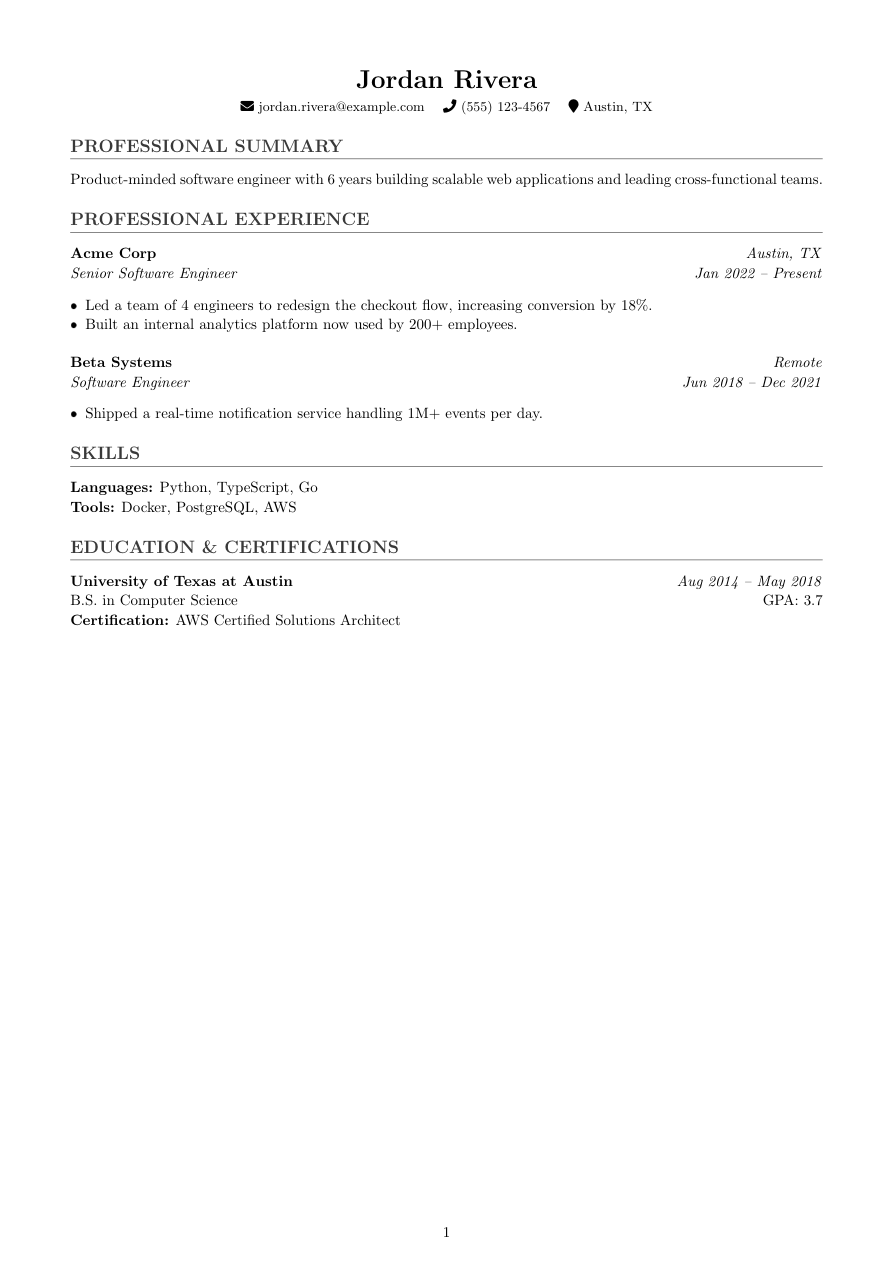
Classic
Information-first structure with no visual noise — well suited to a resume that leans on tool names and specific metrics.
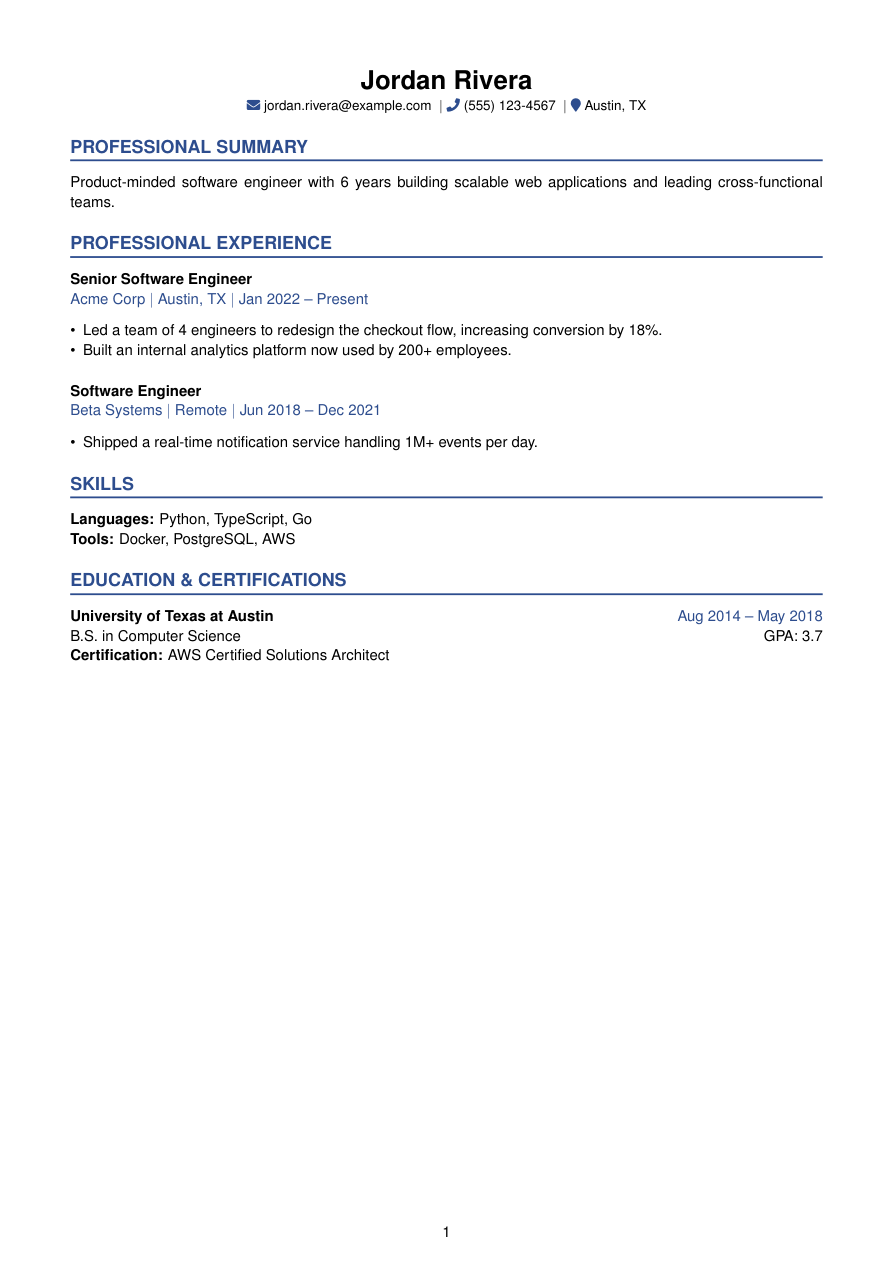
Accent
The same structure as Classic with one restrained color accent, if you want a touch more polish without going bold.
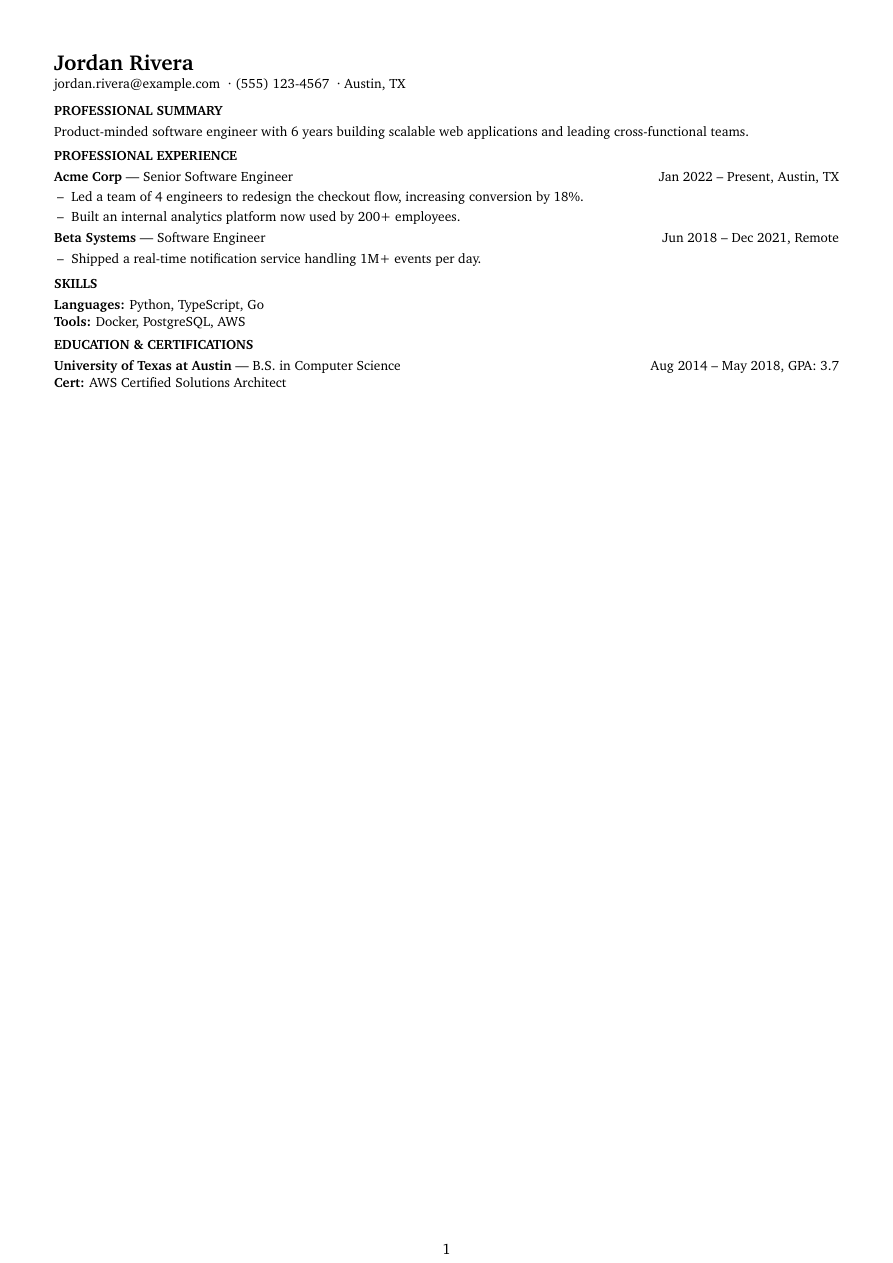
Compact
For analysts with several years and multiple reporting projects to fit on one page without cutting real work.
Common questions
What's the difference between a data analyst and data scientist resume?
An analyst resume centers on SQL, dashboards, and reporting tied to business decisions. A data scientist resume centers more on modeling, experimentation, and sometimes production ML. If your actual work is reporting, don't frame it as modeling — it reads as inflated in an interview.
Should I list specific tools like Tableau or Power BI, or just say "data visualization"?
Name them specifically. A lot of analyst hiring starts with a keyword scan for the exact tool stack a team uses, and a vague line like "data visualization" doesn't match against it.
How do I write a bullet about a dashboard I built?
Name the business question it answered and what changed because of it, not just that it exists. "Built a dashboard" is a task; "built a dashboard that surfaced a drop-off and led to a pricing change" is an outcome.
Can I upload my current resume and convert it to one of these templates?
Yes — upload a PDF or DOCX and Refyn converts it into any of its ten LaTeX templates, so you're not retyping your work history to change the look.