[ Resume Templates for New Grads ]
New grad resume template (no full-time experience needed)
A new-grad resume has a different problem to solve than an experienced one: there usually isn't a long work history to lead with, so the resume has to earn credibility through coursework, projects, and whatever internships or part-time work exist — without padding those out to look like something they're not. Reviewers reading new-grad resumes generally know this going in; the resume doesn't need to disguise a short work history, it needs to make the most of what's actually there.
The layout choice matters more here than for an experienced resume. Education usually needs to lead, not trail behind a thin experience section, and a projects section deserves the same bullet structure (what you built, what decision you made, what the result was) as a real job would get — not a bare list of repo names or class titles.
This page covers what to prioritize on a first resume specifically, and which Refyn templates fit that expectation.
What reviewers scan for first
- Education — school, degree, expected graduation, and relevant coursework — placed prominently rather than buried under a thin experience section.
- A projects section written like real experience: what was built, a decision made along the way, and the outcome, not just a repo name or class title.
- Any internships or part-time work, even in an unrelated field — it signals reliability and responsibility, which matters when there's little else to go on.
- Whether the resume stays honest about scope, rather than dressing up a class project or a two-week assignment as something bigger than it was.
- Whether the page reads as intentionally spacious for a shorter resume, versus stretched thin with unrelated filler to avoid white space.
What to lead with
Put education first — unlike an experienced resume, this is the section carrying the most weight, so it should lead, not trail. Follow it with a projects section written with real bullet structure, then internships or part-time work if you have them. A skills section can come after that; for a first resume there's often more to prove there than in a short experience section, so it's worth a real list rather than an afterthought line.
Common mistakes on a new grad resume
- Listing course titles instead of what was actually built or learned in them — "Data Structures" says little; a project built for that class, described properly, says more.
- Presenting a class project with the language of a shipped, production system, when it was a two-week assignment — reviewers can usually tell, and it costs credibility in an interview.
- Padding the page with unrelated high school activities or filler bullets to avoid white space — a shorter resume with real white space reads as confident, not incomplete.
- Formatting choices that visually apologize for a shorter resume — oversized fonts, wide margins stretching one paragraph to fill a page — instead of a template built to hold that length well.
Templates that fit a new grad resume
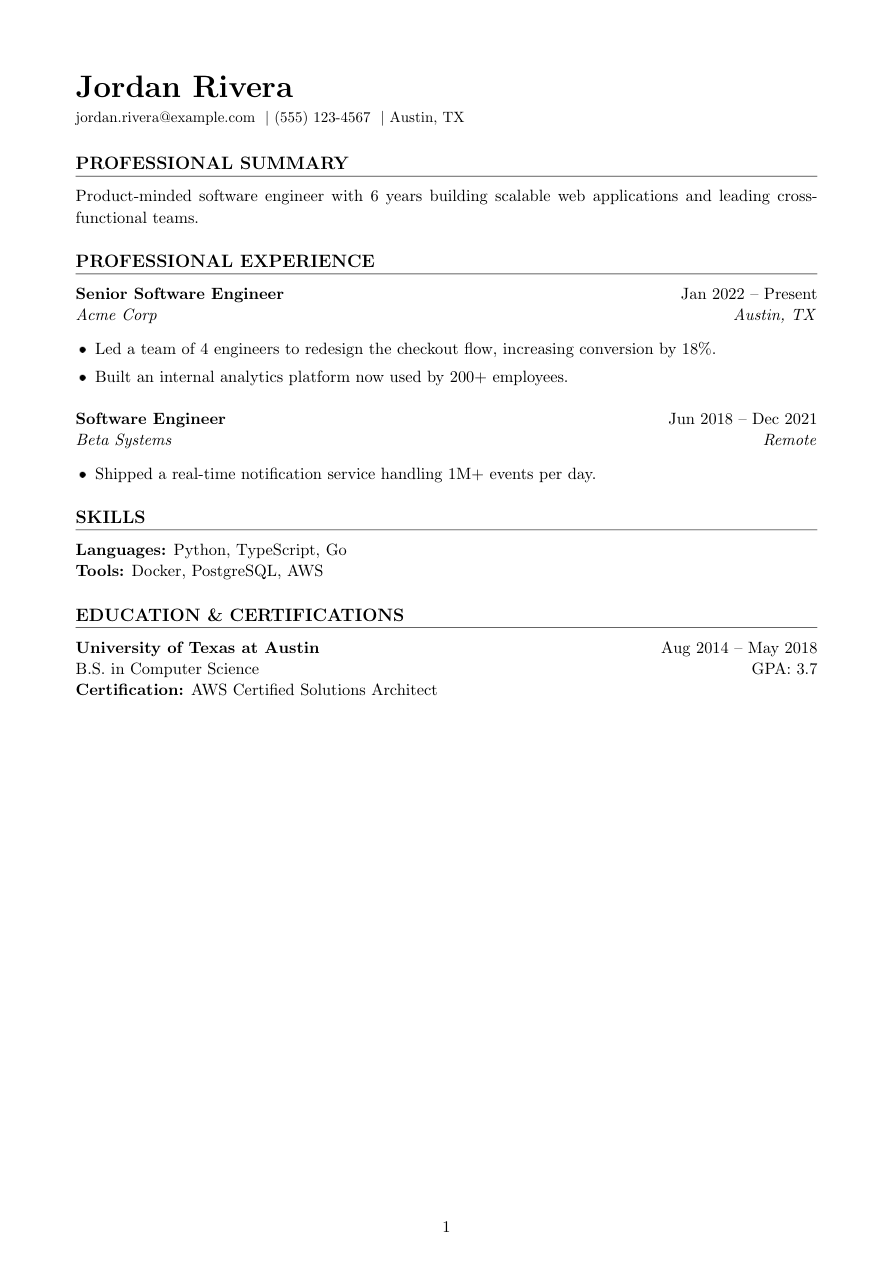
Graduate
Built specifically for a shorter resume — education-first structure with roomier spacing that reads as intentional, not empty.
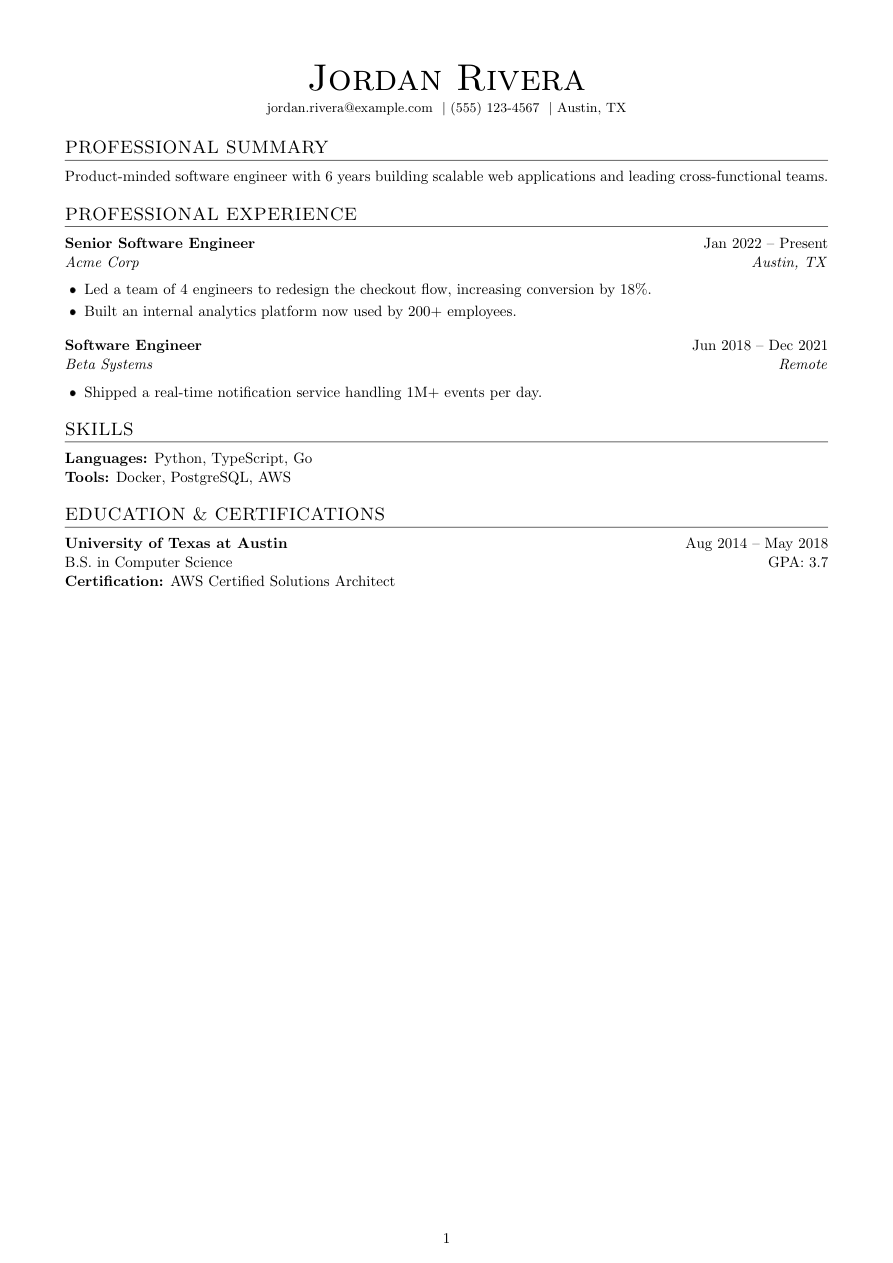
Jake's
The recognized default for tech-focused new-grad applications, if you're targeting software or data roles.
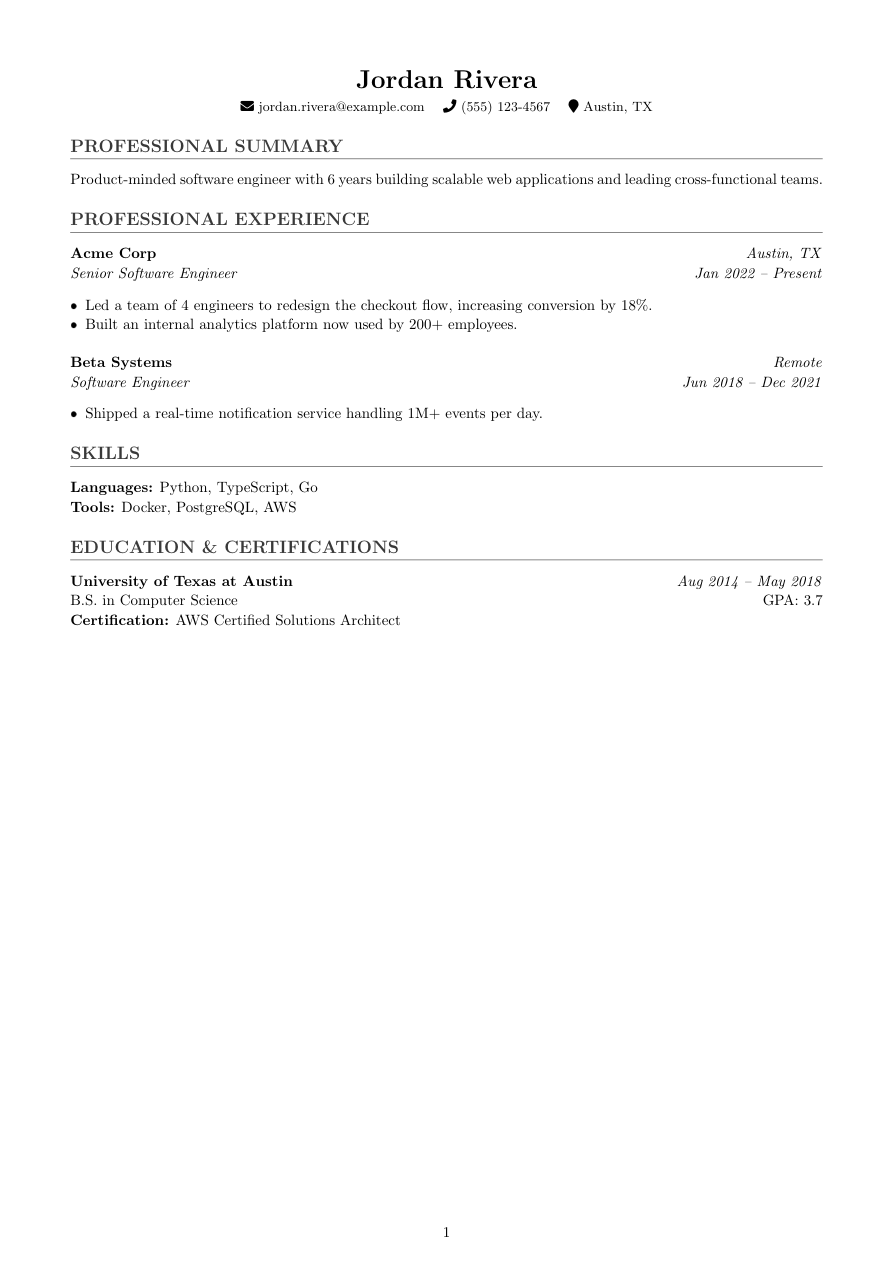
Classic
An information-first, industry-neutral option if you're applying broadly rather than to one field.
Common questions
Should my education be at the top of my resume as a new grad?
Generally yes — with limited work history, education is usually your strongest credential, so it should lead rather than trail behind a thin experience section.
How do I write about a class project like it's real experience?
Use the same bullet structure a job description would get: what you built, a specific decision you made, and the result. Stay honest about scope — a well-described class project reads better than an inflated one.
Should I include unrelated part-time jobs, like retail or food service?
Yes, especially with a short resume — it signals reliability and shows you've held responsibility, even if the work itself isn't related to the role you're applying for.
Is it okay if my resume doesn't fill the whole page?
Yes — Graduate is built with that in mind. Deliberate white space reads as intentional on a first resume; the alternative (stretched margins, padded content) usually reads worse than the empty space would have.