[ Resume Templates for Data Scientists ]
Data scientist resume template
A data scientist resume is read for technical depth first — the frameworks you've used (PyTorch, TensorFlow, scikit-learn), the kind of problems you've modeled, and whether the work shows real experimental rigor rather than a single notebook that ran once. For research-track roles, education and publications carry more weight than they would for most other positions on this page.
The gap that shows up most often isn't a missing framework — it's a project described as "built a model" with no mention of the problem it was framed to solve, how it was validated, or whether it ever left a notebook. A model that was A/B tested and shipped reads very differently from one that was accurate in a Jupyter notebook and nowhere else.
This page covers what to prioritize on a data scientist resume specifically, and which Refyn templates fit that expectation.
What reviewers scan for first
- The ML/statistics frameworks and languages you've actually used — PyTorch, TensorFlow, scikit-learn, R, SQL — named specifically.
- Whether a project bullet frames a real problem (what you were trying to predict or explain) before describing the model.
- Evidence of experimental rigor — how you validated a model, what you compared it against, whether you ran an A/B test — not just an accuracy number.
- Whether work reads as production experience (a model that shipped and was monitored) or exploratory analysis (a notebook) — both are legitimate, but the resume should be honest about which.
- For research-track roles, publications, competitions, or an advanced degree, since those substitute for years of industry experience.
What to lead with
Lead with technical projects or research if your work history is short — a strong project section, written with the same rigor as an experience bullet (problem, method, validation, result), carries real weight here. For research-oriented roles, move education and publications higher; for applied/industry roles, lead with the most production-relevant experience and treat academic projects as supporting evidence, not the headline.
Common mistakes on a data scientist resume
- Listing algorithms and frameworks without describing the problem they were applied to — a reviewer can't evaluate "used XGBoost" without knowing what it was predicting.
- Presenting a class or personal project with the same weight as production experience, without being clear about the difference.
- No mention of how a model was validated or evaluated — reviewers in this field specifically look for evidence of rigor, not just a result.
- Treating communication as an afterthought — data science roles usually require explaining a model's tradeoffs to non-technical stakeholders, and a resume with zero signal of that reads as incomplete.
Templates that fit a data scientist resume
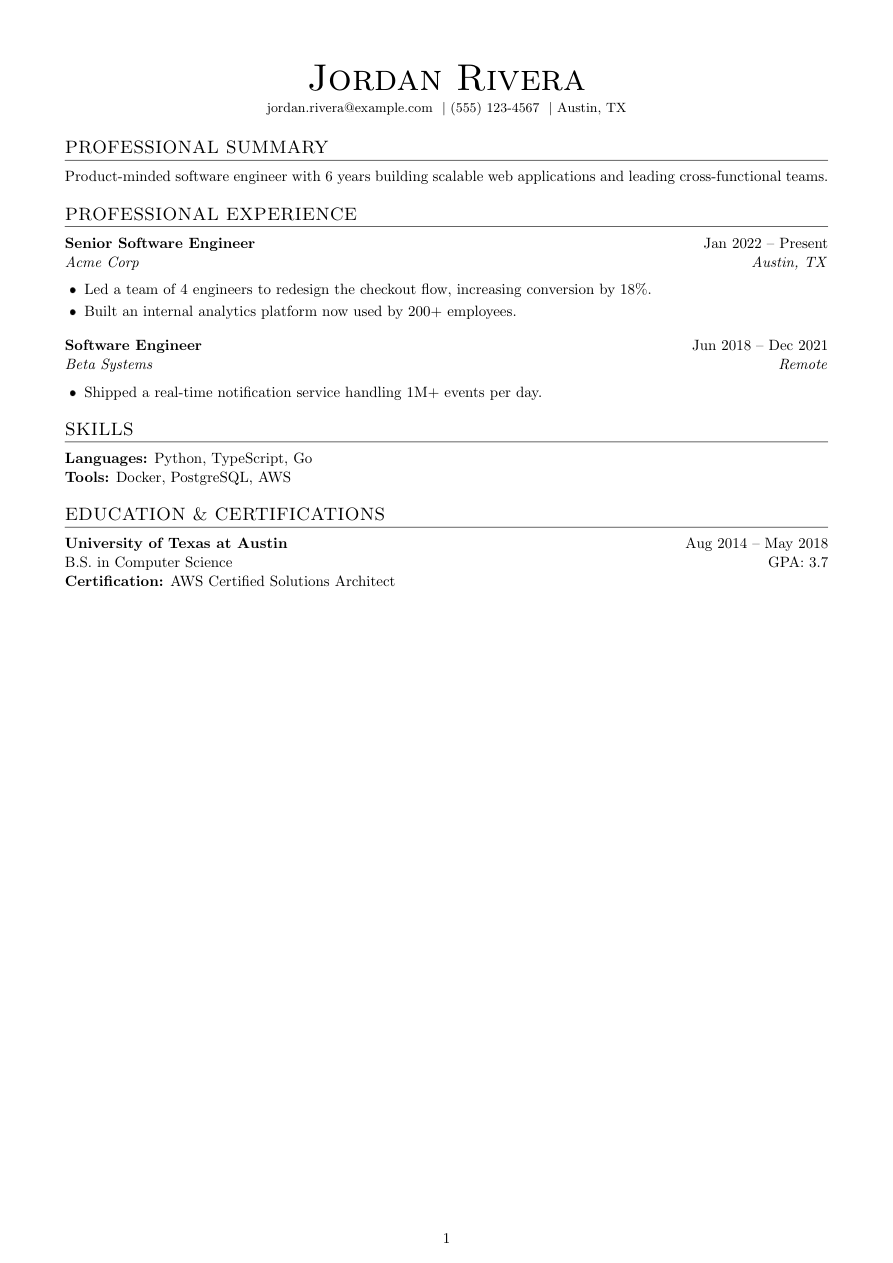
Jake's
The same recognized, plain, single-column default used across technical roles — a safe choice for industry-focused DS applications.
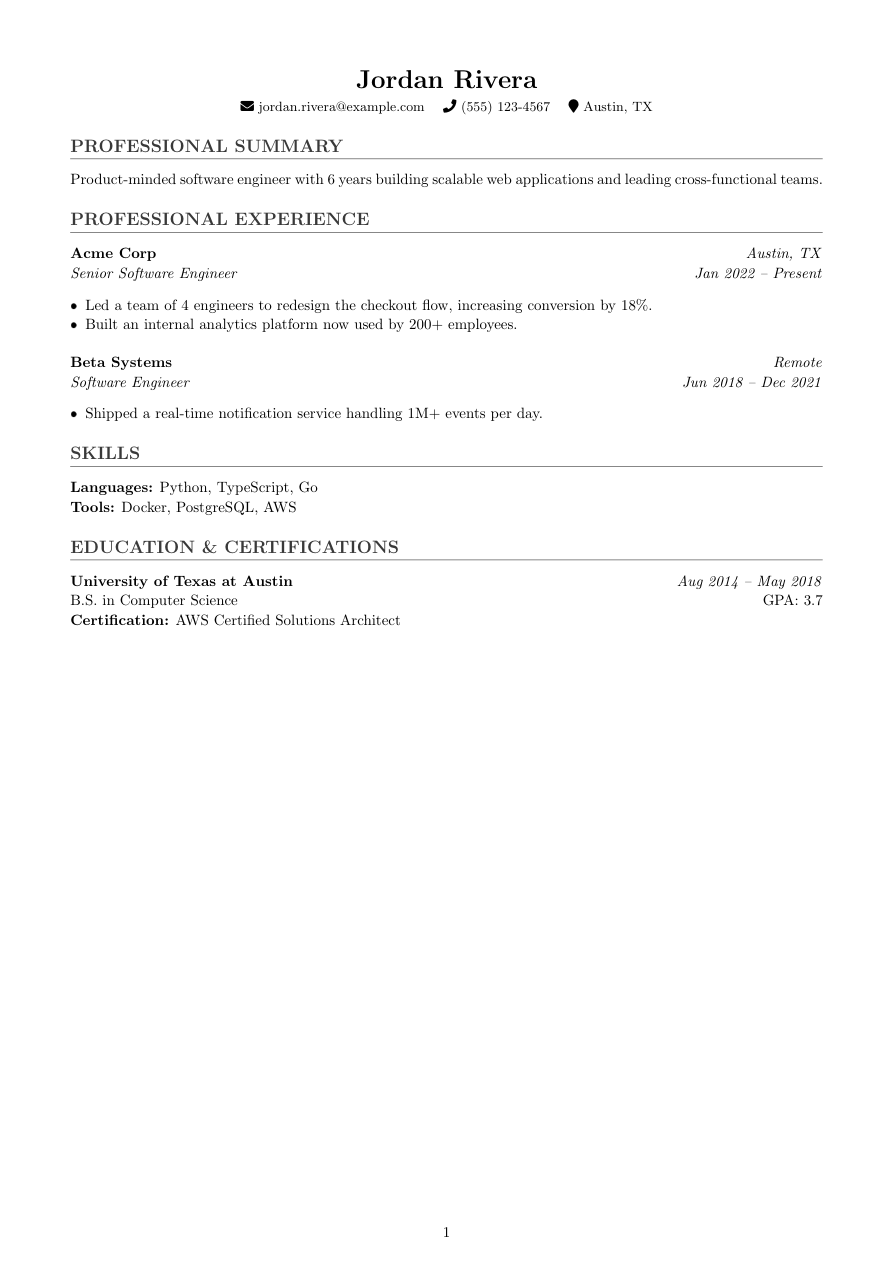
Classic
Information-first structure that keeps the focus on project and research descriptions rather than layout.
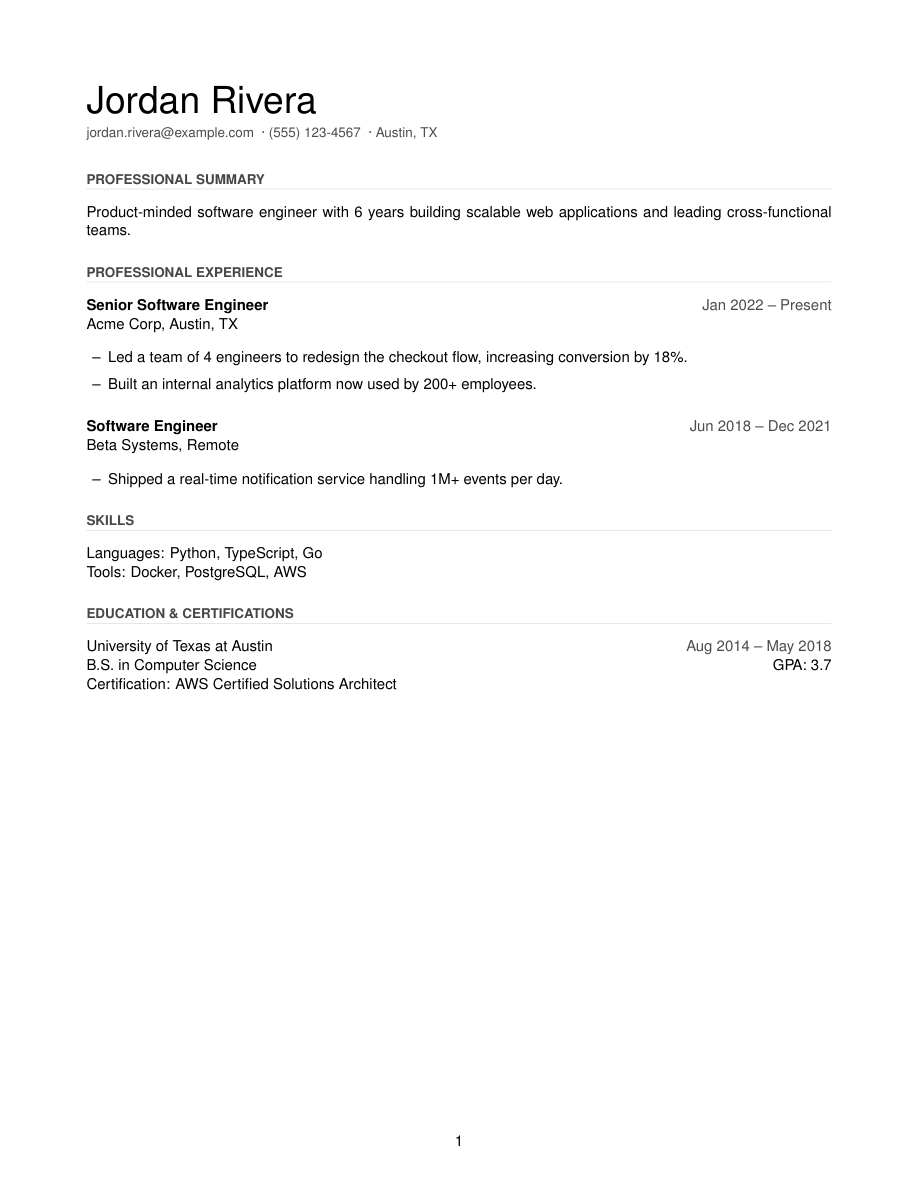
Minimal
A quieter, more typographic look if you want something that reads as considered without any color.
Common questions
Should my resume list every ML algorithm I know?
No — list the frameworks and methods you can speak to in depth, tied to the projects where you used them. A long list of algorithm names without context doesn't hold up under interview questions.
How do I present a class project without it looking inflated?
Be specific about scope and be honest that it was academic. A well-described class project (the problem, the method, the result) is more credible than a production-sounding bullet for work that never left a notebook.
Is Academic a better fit than a one-page template if I have publications?
Only if you have enough publications, talks, or grants to genuinely run past a page — Academic is built for CV-length documents. Most industry-track data science resumes still fit on one page; keep publications to a short list within it unless the role expects a full CV.
Can I convert an existing resume into one of these templates?
Yes — upload a PDF or DOCX and Refyn converts it into any of its ten LaTeX templates, no retyping required.